
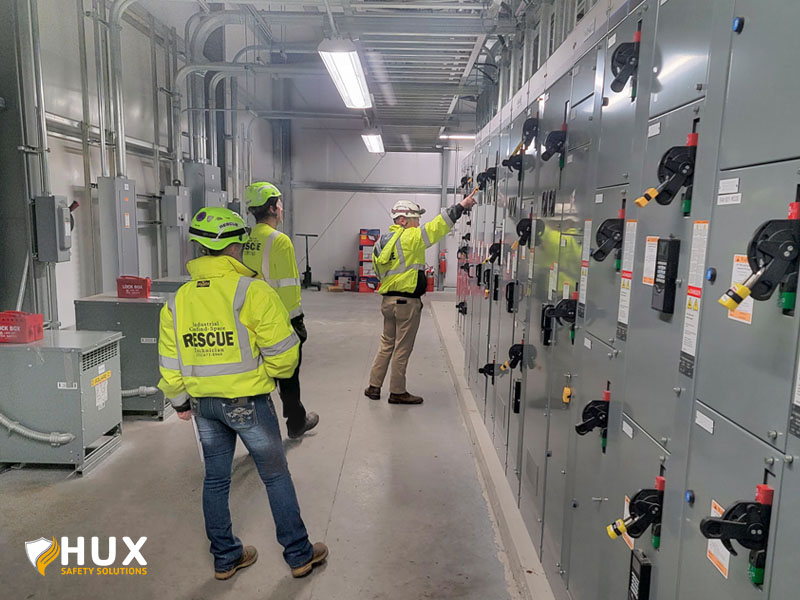
Every job starts the exact same way. Consistency saves lives.
1. Hazard Assessment
Before equipment comes off the truck, we walk the space, identify hazards, understand the work being done, and evaluate the geometry, atmosphere, and energy sources. This assessment drives every decision that follows.
2. Rescue Plan
We build a space specific rescue plan before anyone enters. Vertical, horizontal, restricted, IDLH potential — it all matters. We determine the rescue method, equipment, communication plan, and extraction path up front.
3. LOTO and Try Start This is where many teams reveal whether they’re truly ready.
“If a rescue team doesn’t walk down the LOTO and verify a try start before entry, they’re not ready for the moment it matters most.”
A professional rescue team:
- Walks down the LOTO
- Verifies every isolation point
- Performs a try start
- Confirms zero energy state
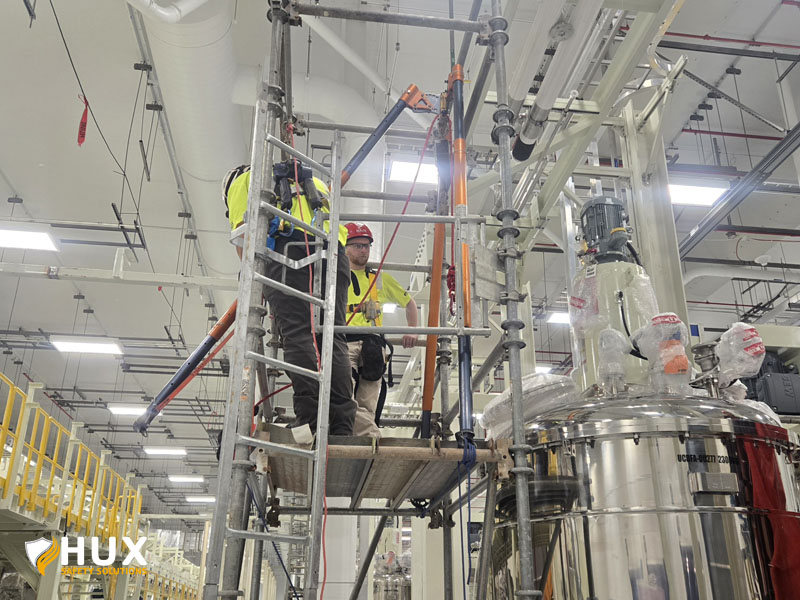
If a rescue team doesn’t do this before entry, they won’t be ready when it matters most. Because once someone needs rescue, you can’t perform a try start. You can’t verify the LOTO. You can’t walk down the system safely. And no rescuer should ever enter a space without being on the LOTO themselves.
This is why more rescuers die attempting a rescue than the number of original victims. They enter without verified isolation because they’re out of time.
Preventive rescue eliminates that scenario entirely.
4. Pre Entry Equipment Setup
For vertical entries or high hazard work, we stage all rescue equipment before the first entrant goes in. No scrambling. No delays. Everything is ready.
5. Permit Review and Communication
We review the permit, confirm it matches reality, and ensure a direct, uninterrupted line of communication between the attendant and the rescue team. No relays. No confusion.
6. Continuous Monitoring
We stay engaged with the operation — not sitting on the sidelines. We watch the work, the workers, the atmosphere, the equipment, and the conditions. If something starts trending in the wrong direction, we intervene early.
Why We Call Ourselves a Preventive Rescue Team
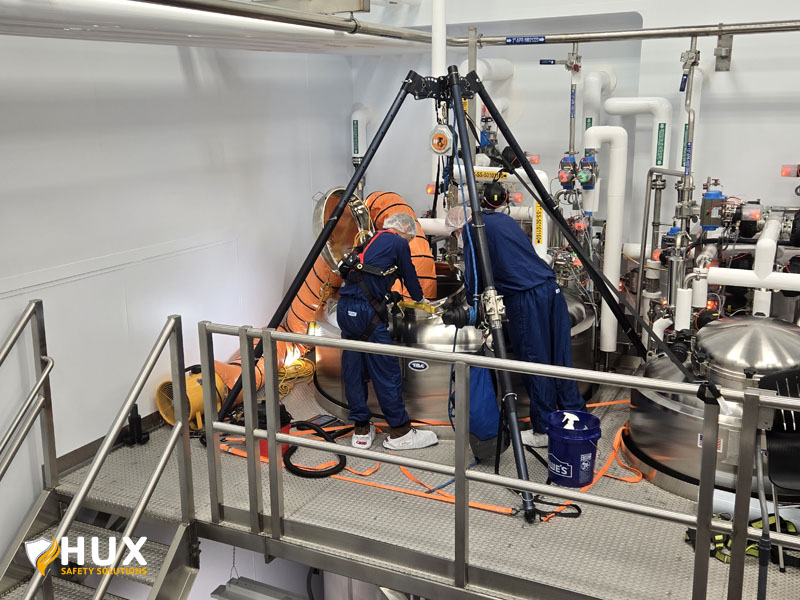
We’re not just standing by. We’re involved.
“We’re not standing by. We’re involved. We’re watching, anticipating, and correcting issues long before they become emergencies.”
We’re scanning for hazards, catching issues early, and mitigating problems before they become emergencies. Workers notice this. They see us paying attention. They see us correcting small things before they turn into big things.
And that changes everything.
One of the most common questions workers ask me is: “How many rescues y’all ever done?”
They expect a big number. When I tell them the answer is zero, it always catches them off guard. But once I explain why, you can see the relief on their faces.
“When workers hear we’ve never had to perform a rescue, it changes everything. It tells them we’re preventing the emergency before it starts.”
They know the hazards. They know how quickly things can go wrong. Hearing that we’ve supported thousands of entries without a single rescue isn’t a sign of inexperience — it’s proof that our preventive approach works.
Monitoring Done Right: Not Just a 4 Gas at the Entry Point
Another thing that sets us apart is how we handle atmospheric monitoring.
A 4 gas monitor is not enough when VOCs are present. And monitoring at the entry point doesn’t tell you what the worker is breathing inside the space.
We ensure:
- The right instrument is used for the actual hazard
- VOC monitoring is performed when needed
- Sampling occurs where the workers are
- Monitoring is continuous, not occasional
This alone prevents countless near misses.
How Many Lives Have We Saved?
We’ll never know the exact number. But I believe at least one worker went home who might not have without our involvement. And if our system saved even one life, every hour we’ve spent refining it has been worth it.
“We may never know how many lives our system has protected, but if even one worker went home who wouldn’t have without us, it’s worth it.”
A Blueprint for Other Rescue Teams
Everything in this post isn’t just how we operate — it’s a blueprint any rescue team can adopt. These practices aren’t proprietary. They’re principles that save lives.
If another team takes even one part of this approach and it helps a worker go home safely, that’s a win for everyone. At the end of the day, saving lives is what matters most.
Our Goal Is Simple
“A rescue team shouldn’t measure success by how many rescues they perform. Our goal is to never perform one. If we’ve done our job right, the emergency never happens in the first place.”
That’s preventive rescue. That’s what we stand for. And that’s why our record speaks for itself.